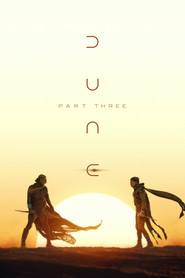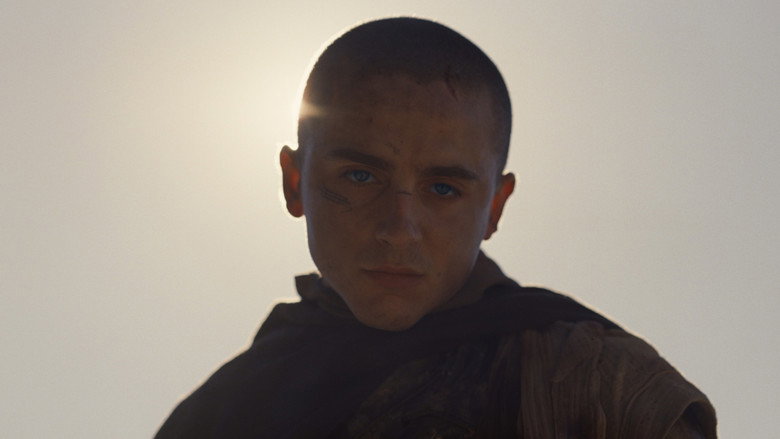
Dune unfolds as the biggest hero's journey in modern cinema. A young man from a fallen house, a prophecy, a desert that turns him into something more than himself. Villeneuve shoots it with such conviction that it's easy to walk out of the theater feeling like you just watched a triumph.
But are we missing the point? Because for Herbert, Dune was not admiration, it was a warning.
Herbert said as much himself: he believed charismatic leaders should come with a warning label. He saw what happens when people hand their judgment over to someone who seems larger than life. A leader's mistakes, he argued, can cost us too much. They get amplified by everyone who follows without asking questions. Herbert pointed to Jonestown. He pointed to that same unquestioning yes that drags a country into a war it never needed. He pointed to how easily a crowd chanting one man's name stops being a crowd of individual people at all.
Paul Atreides is that same pattern dressed in messianic robes. The Fremen don't follow him only because he's skilled and brave. They follow him because he fits perfectly into a myth they were already primed to believe. And once that kind of faith is behind him, he stops fully controlling what gets done with it.
We usually look at this as spectacle, but it's worth trying to see it as a mirror of our own society.
Because this pattern isn't science fiction at all. We meet someone who seems certain in a moment when we ourselves are lost, and certainty is intoxicating. We stop asking what happens after he wins. We hand over the part of our own judgment that was supposed to stay ours, because carrying it alone can feel like too much sometimes. And by the time we notice where we've been led, it's already too late.
Herbert wasn't writing about any one leader or any one moment. That's exactly why the book keeps working decade after decade, no matter who happens to be in power when you're reading it. This warning isn't about them. It's about the moment we decide someone else should do our thinking for us.
None of this makes Dune any less worth watching. If anything, it makes it worth watching twice. Once for the spectacle, and once for the question hiding underneath it: when the film swept you up, whose side were you really on, the crowd's or your own.
This is the core of a film truly built to last. It doesn't hand you a conclusion. It hands you a mirror and leaves you to decide what you see in it.
About this film